
Searching Linn County Criminal Dockets
Missouri Case.net is the public entry point for Linn County criminal docket work. There is no standalone Linn criminal database. Case.net spans the whole state. Check any result against Linn County, the Ninth Judicial Circuit, the case number, the case style, and the division before calling it a local case. The four official search methods are Litigant Name Search, Filing Date Search, Case Number Search, and Scheduled Hearings & Trials Search. A bare name is only a lead. County plus case category matters. It tells you whether a hit truly belongs in the Linn criminal docket.
Keep the citation, the notice, or the prior court paper at hand. The case number is the fastest identifier. Without it, search the litigant name. Then narrow the field by county, date, case type, or year where the live form allows. One caution: the direct Case.net search page can return a 403 response. Filters, wildcards, and on-screen labels may differ from what you expect. A docket search sometimes needs certainty. The official landing page and the Linn County clerk are the dependable routes.
- Open Case.net and select the search method that matches the information in hand.
- Enter the Missouri case number, or search the litigant name and narrow the result to Linn County when that choice appears.
- Compare the case header’s county, style, filing date, division, and category with the court paper before opening entries.
- Read docket events in date order, then separately note the most recent future setting and the latest disposition or order.
- Ask the Linn County Circuit Clerk for a plain or certified copy if an official court copy is needed.
Note: A Case.net tracking alert is a convenience notice only, never an official court notice.
Linn County Criminal Docket Codes
Missouri's recordkeeping rules make the case number worth reading before you open the docket itself. A criminal category may show up as CR or R. Older interim formats run a year, a two-letter case type, and a sequence together. The code is a category clue and nothing more. It is not a ruling. Traffic and municipal matters can carry a different category. This can happen even when the party names look identical. Older converted numbers may hold different segments entirely.
- Case header
- The Case.net identity block showing the case number, style, and basic case information.
- Information
- A prosecutor-filed charging instrument that can follow the preliminary stage where applicable.
- Continuance or reset
- A moved or deferred setting. It records a scheduling change, not a final case outcome.
- Disposition
- The case or charge result shown by the court, such as a dismissal, plea result, or other resolution.
Missouri COR 4 sets out the recordkeeping framework behind these categories and the chronological docket. That official rule is what the page reflects. A case code helps you pick the right file. The header and the entries still carry the actual court history.
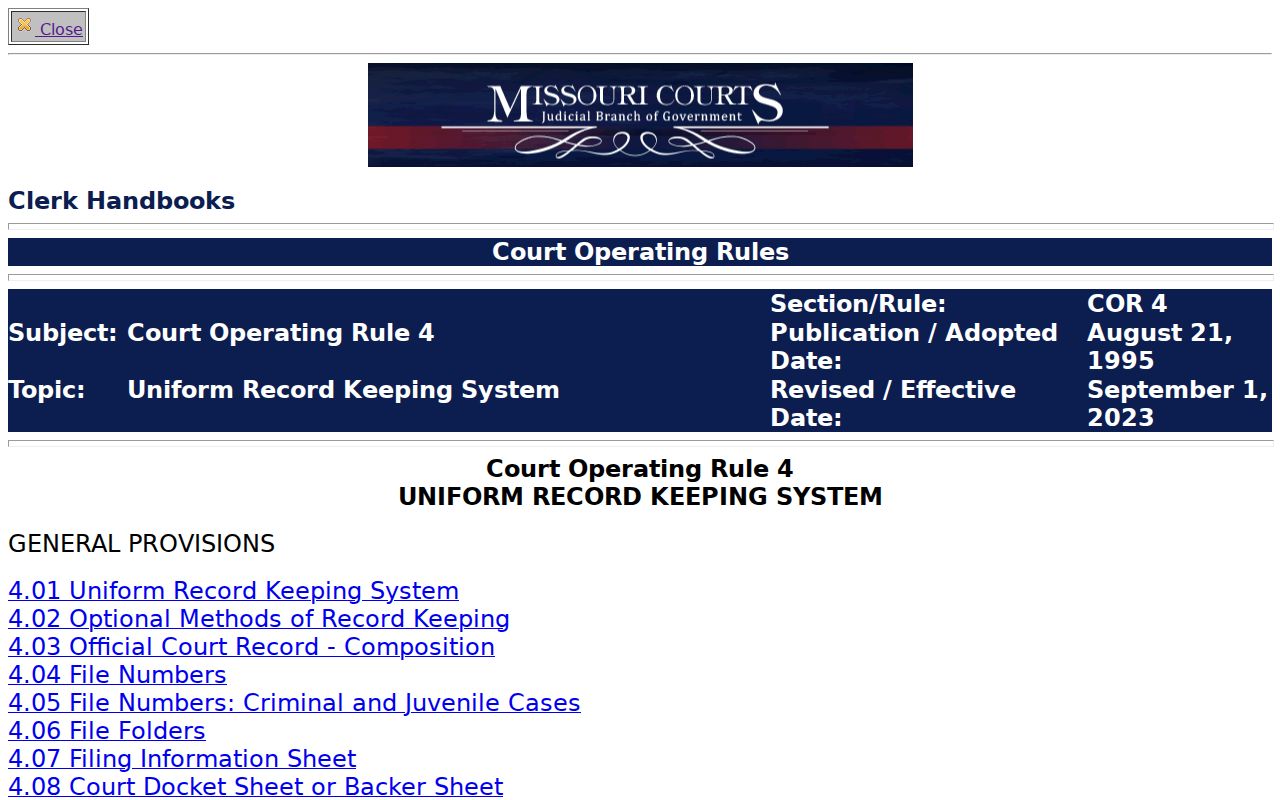
On a Linn County criminal docket, read the displayed category together with the court, the county, and the case style. A prefix alone is never the full answer.
Inside a Linn County Criminal Docket
Every criminal docket has two parts: a case header and a dated register. The public fields often cover a lot. Expect the Missouri case number, filing date, county, court or division, case style, status, parties, attorneys of record, charge information, settings, and later financial or reporting entries. A document link may open an attached indictment, information, motion, order, judgment, or notice. When a link is missing, that proves nothing. It may mean no document was attached. Or the public viewer simply cannot open it.
| Case number | A Missouri identifier, often with a criminal category such as CR; confirm Linn County and the division. |
|---|---|
| Charge and count | Offense description, classification, statute or charge code, and count information when publicly displayed. |
| Register | Chronological filings, process, appearances, motions, orders, settings, hearings, and post-judgment events. |
| Setting block | Date, time, court or division, and setting type, with judge or room when that public view provides it. |
| Disposition | The court-recorded result. Read the actual entry or judgment rather than inferring a result from a charge. |
| Document access | A linked public image may be available; confidential, sealed, or unattached material can remain unavailable. |
Missouri File Viewer Help explains the blue case-header bar, the categories pane, document links, and the viewing limits Case.net applies to the public. That official help screen appears here. The layout shows why docket visibility and document visibility are two different questions.

So a public Linn County criminal docket can confirm that an event happened. It cannot promise that every related image is open to view online.
Linn County Criminal Docket Reading Cautions
A case style naming the State as prosecutor is not a finding of anything. A charge stays an allegation until the docket shows a disposition or judgment. The same caution governs motions and settings. A motion entry is a request, not an order. A notice of setting announces a court date, not proof the hearing took place. Even a hearing-held line may lack a transcript or skip an oral ruling.
Always pair the event date with the event type. Work through the earlier entries. The last order, judgment, or disposition controls. An old future date may be followed by a reset, continuance, or pass. The old line stays in the history. But the later one answers the scheduling question. Read this way, you will not mistake a reset for a dismissal or a filing for a decision.
The official Case.net search destination is the page behind the image here. It serves as a statewide route for Linn County criminal docket work. The direct endpoint may not always load for every visitor. When a setting truly matters, verify the result against the original court notice.
The court record answers one question: what the court entered. It supports no conclusion beyond the charge, order, or disposition actually shown.
How a Criminal Case Moves
A Linn criminal register often opens with a complaint, process, or initial appearance. Later entries may add counsel, arraignment, a plea, an indictment or information, motions, and notices of setting. Then comes hearing or trial activity. Finally, a judgment or sentence may appear. No two cases hit every step in the same order. Read the docket from the first filing forward. Then look again for the newest setting and any post-judgment event. That second pass keeps the picture current.
Docket flow: Charge Filed › Arraignment › Pretrial Settings › Plea or Trial › Disposition › Sentencing or Post-Judgment Entry
A docket result can read in several ways. Expect labels such as pending or active, guilty or convicted, dismissed, nolle prosequi, acquitted, deferred or conditional, and judgment or sentence entered. Dismissal and acquittal are not the same thing. Likewise, a bond-forfeiture or capias entry is a process step in the criminal docket. It is not a ruling on the merits. For the exact result, the order or judgment itself, where lawfully available, beats any summary line.
Linn County Criminal Docket Remote Access
Remote access to a Linn County criminal docket changed recently. The Ninth Circuit's rollout matters for any case with a long history. Local materials mark documents filed on or after July 1, 2023, as candidates for remote public access. The rollout is scheduled no later than August 1, 2023. That shift does not open every filing. Redaction requirements and confidential categories still apply. An older public docket history can still require a trip to the courthouse for an image.
The Ninth Circuit remote-public-access schedule sets timing only. It does not guarantee access to any individual Linn County criminal record. A public-access session at the courthouse differs from the open web view. Yet the same seals, confidentiality rules, and redactions govern both.
One caution. A docket line the public can see and a document the public can open are two different levels of access.
Linn County Criminal Docket Fallback
No Case.net result does not mean no case. Recheck the case number first. Then search by filing date or name, and ask whether a municipal matter sits under a Circuit Court case number instead. If the Linn County docket search still comes up empty, call the Circuit Clerk at (660) 895-5212, visit the counter at 108 N. High Street, or mail a precise request to P.O. Box 84, Linneus, MO 64653.
Courts That Hold Criminal Dockets
Linn County sits in the Circuit Court of the Ninth Judicial Circuit of Missouri. The Linn County Circuit Clerk keeps the local case record. That covers the court and its assigned divisions. Under local rules, misdemeanors and infractions belong in the associate division. Felonies before information also land there unless another provision applies. Those cases can pick up circuit-level filings and related docket entries later.
Municipal criminal, ordinance, and traffic cases may be assigned to a municipal division of the Circuit Court. Brookfield runs its municipal session at the county courthouse. Even a city ordinance case may call for a Missouri case-number search and a clerk inquiry rather than a city-clerk docket request. If a state appeal follows, the trial-case record can lead to the Missouri Court of Appeals, Western District docket. That docket is a separate appellate record.
Do not confuse the clerk with the Sheriff's records custodian. The clerk supplies the court docket, an order, a judgment, or a certified copy. A Sheriff incident report goes through that office's own request process.
Historic Linn County Criminal Docket Workload
For caseload context, the Missouri Judicial Supplement for fiscal year 2014 offers the most specific public county table. Treat it as history, not a count of today's online cases or future settings. The report splits felony, associate felony, and misdemeanor work into separate categories, which helps when reading a Linn County criminal docket and explaining why a preliminary matter can look different from a later circuit filing.
The FY2014 Missouri Judicial Supplement reported 90 felony, 168 associate-felony, and 337 misdemeanor dispositions that year. Those figures say nothing about the current active docket.
Separately, Missouri’s juvenile-record confidentiality statute governs juvenile files. Its rules are why a juvenile record demands a separate access analysis from an adult Linn County criminal docket.
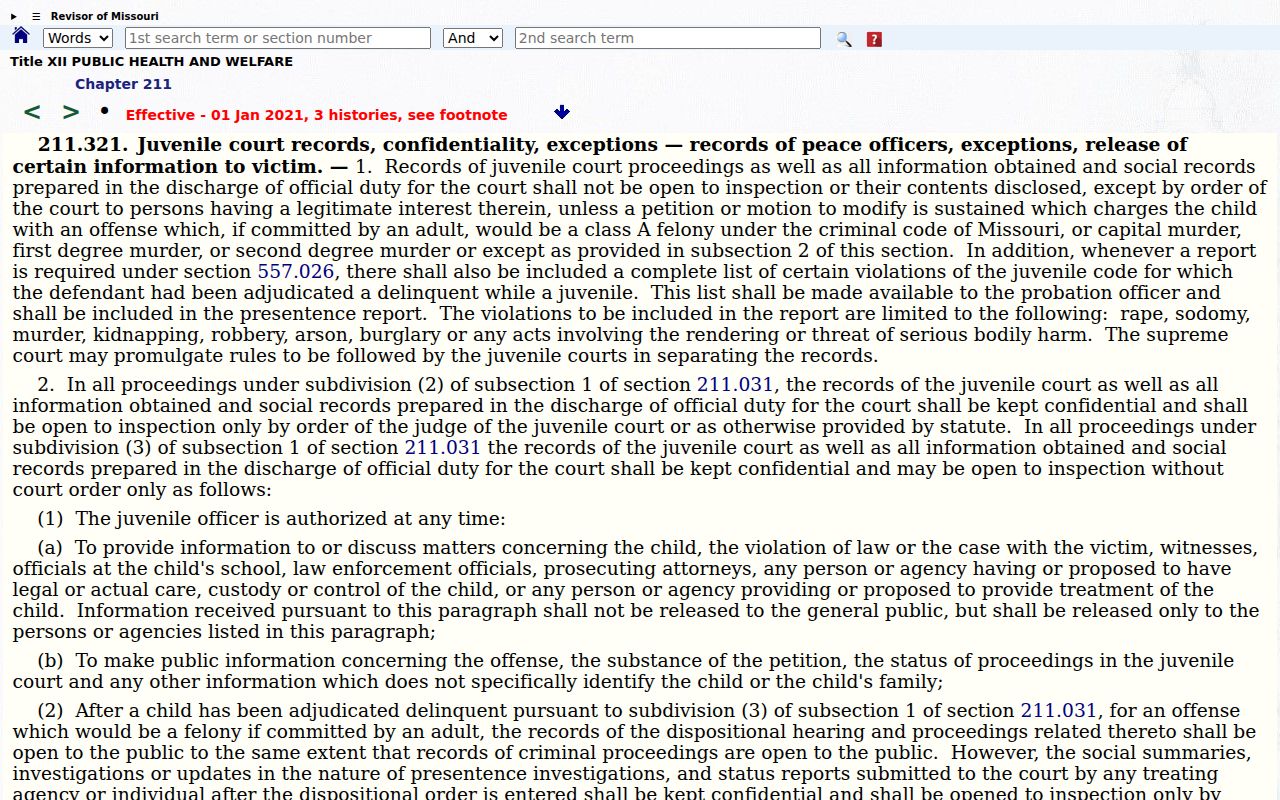
Historic totals describe reporting categories, while juvenile rules limit access to protected records.
Sealed Dockets and Public Access
Case.net can show a public header or docket event while withholding the document image. Missouri restrictions cover juvenile matters, adoptions, mental-health proceedings, grand-jury material, presentence reports, drug-court records, confidential filing-information sheets, and files sealed by statute, rule, or order. A blank or non-hyperlinked document area means just one thing. The item is not visible in the public view. It is not proof the event never occurred.
Missouri access rules: Section 211.321 generally protects juvenile records. Section 509.520 requires protection of specified personal information in court filings. Section 610.140 makes eligible expunged records confidential, subject to its stated exceptions and court orders.
An adult Linn County criminal docket entry may be missing. Its image may be restricted. Save the case number and entry date. Then contact Linn County Circuit Clerk Amber Boley at amber.boley@courts.mo.gov or (660) 895-5212. The clerk can lay out the lawful access route. The clerk can also give a fee estimate for a permitted copy. A general records request cannot override a seal, a confidentiality statute, or a court rule.
Missouri’s expungement statute states the confidentiality rule that can remove a case from public view. That is one lawful reason. A prior public search result may no longer appear. The originating court holds the final word on actual access status.
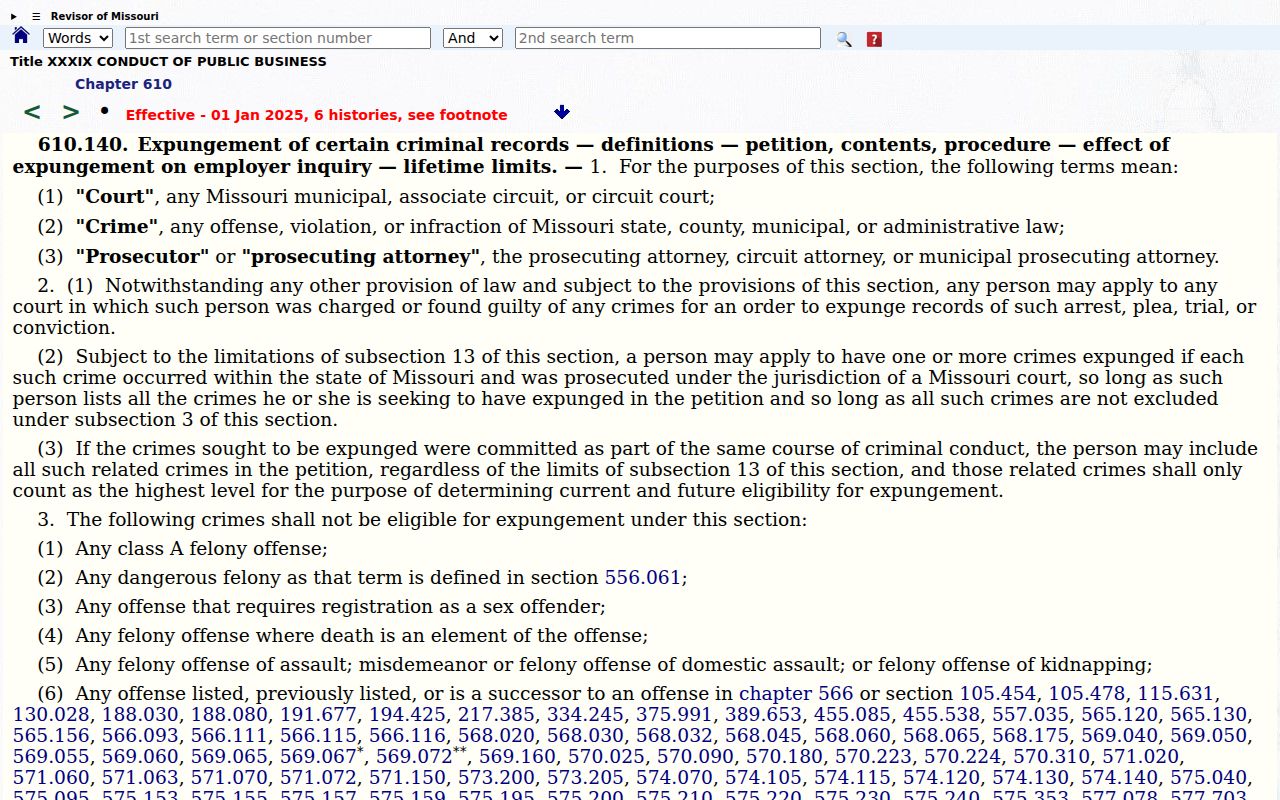
Need a formal copy of a public court file? Request the docket sheet, order, or judgment by its exact case number, and the clerk can produce it.